The Persian Gulf Is on a Knife Edge as Trump’s Iran Deadline Expires
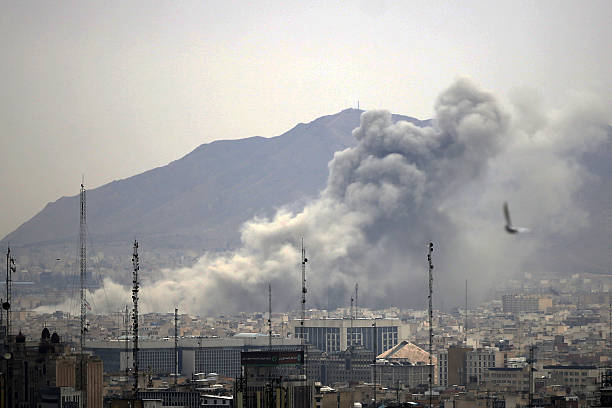
The Persian Gulf has weathered decades of turbulence, but the combination of an active war, a presidential ultimatum, and Iranian counter-threats is pushing the region into territory that few analysts feel confident predicting. What began as a targeted military campaign has evolved into something far more unpredictable, and the consequences of the next miscalculation could reverberate across the entire global economy.
President Donald Trump delivered his latest warning over the weekend through his social media platform, telling Iran in unambiguous terms that its continued blockade of the Strait of Hormuz would result in American strikes on Iranian power plants. The message was not accompanied by diplomatic overtures or conditions for negotiation. It was a deadline, pure and simple, set to expire within 48 hours.
Iran did not blink. Military officials in Tehran responded with a statement that matched Trump’s ultimatum in both clarity and severity. If American forces attacked Iranian power infrastructure, the strait would be completely and indefinitely closed. Beyond that, the statement identified energy facilities and power plants located in Gulf states that host American military bases as targets in the event of further escalation. For countries like Qatar, Saudi Arabia, the United Arab Emirates, and Bahrain, that warning was impossible to dismiss.
Energy Markets Already Under Severe Strain
The conflict has been exacting an enormous economic toll since its opening weeks. The Strait of Hormuz carries roughly a fifth of the world’s daily oil and gas supply under normal circumstances. Since American and Israeli operations against Iran began last month, that flow has been drastically reduced, sending energy prices to levels that are already straining economies far removed from the Gulf itself.
The damage has not been abstract. Qatar’s Ras Laffan facility, one of the most important natural gas processing complexes anywhere in the world, absorbed two Iranian missile strikes last week. The attack came in direct response to an Israeli strike on Iran’s South Pars gas field and sent an immediate tremor through global energy markets. Prices that were already elevated climbed further still, and the incident served as a vivid demonstration of how quickly infrastructure that took decades to build can be put at risk.
The prospect of Iranian retaliation against a wider set of regional targets, if Trump’s threat is carried out, raises the possibility of damage on an entirely different scale. Iran’s missile and drone capabilities have been reduced over the course of the conflict, but they have not been eliminated. Analysts warn that even a degraded arsenal, directed at the right targets, could inflict harm that takes years rather than months to repair. Trump himself has previously noted that striking core Iranian infrastructure would leave the country poorly positioned to rebuild once the fighting ends.
A Different Kind of Cost
The economic fallout extends well beyond commodity prices. The Gulf states most directly threatened have spent enormous resources over the past several decades transforming themselves into global destinations. Dubai, Abu Dhabi, and Doha in particular have built financial sectors, airline networks, and tourism industries that depend fundamentally on a reputation for safety and predictability.
That reputation is now visibly eroding. Residents with the means to leave have been doing so. International visitors are rerouting. The ecosystem of businesses built around Gulf stability, from luxury hospitality to international banking, is operating under a cloud of uncertainty that no amount of official reassurance has been able to fully lift.
Whether the current situation stabilizes or deteriorates into something far worse remains genuinely uncertain. The conditions for a serious and lasting escalation are present in a way they have rarely been before. Each passing hour without resolution extends the period during which a single strike, a miscommunication, or a decision made in anger could set in motion consequences that no party to this conflict currently has the power to control.

Iran Scrambles to Avert Israeli Retaliation After Missile Strikes
Iran is urgently engaging in diplomatic efforts across the Middle East, trying to mitigate Israel’s expected response to its recent missile attack. Tehran is
Read More
Trump Considers Pressure Tactics Amid Escalating Iran Protests
As anti-government protests continue to sweep across Iran, President Donald Trump is reviewing a range of potential responses, including both military and non-military
Read More
Where Is Iran’s New Supreme Leader? A Nation Waits for Answers
Iran has a new supreme leader. But nobody has seen him. Nobody has heard his voice. And as the days stack up since
Read More