United Airlines Is Done With Loud Passengers — And It Is Now Official Policy
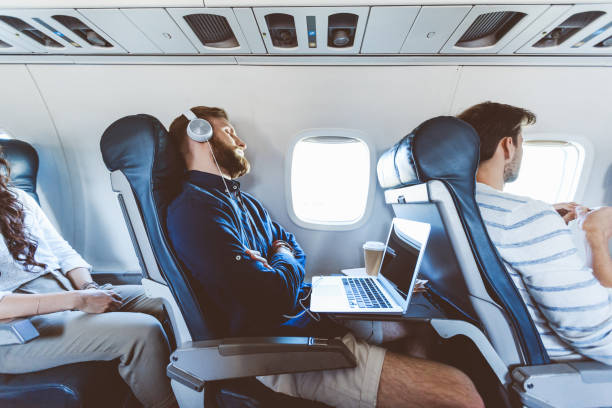
There is a particular kind of in-flight experience that has become depressingly familiar to frequent travelers — the passenger three rows back playing videos at full volume, apparently unaware that everyone around them can hear every word. United Airlines has decided it has had enough, and has put that frustration into writing.
The carrier has revised its contract of carriage to formally address the issue of passengers who play audio or video content without headphones. Under the updated policy, anyone who refuses to use headphones can be denied boarding or removed from the aircraft entirely. It may sound like a small administrative change, but for the millions of travelers who have silently suffered through other people’s noise at 35,000 feet, it represents a meaningful shift in how airlines are willing to enforce basic courtesy.
The context matters. American aviation recorded more than 1,600 incidents of disruptive passenger behavior last year, according to federal aviation data. While that figure represents a significant improvement from the peak of nearly 6,000 incidents recorded in 2021, it still far exceeds the levels that were considered normal before the pandemic disrupted travel patterns and, apparently, social norms along with them. United’s decision to draw a formal line around headphone use signals that airlines are increasingly willing to treat passenger conduct as a policy issue rather than simply a social one.
The World’s Happiest Countries — And Where America Ranks
Away from the noise of aviation news, the annual World Happiness Report delivered its verdicts for 2026, and the results will surprise nobody who has been paying attention in recent years. Finland claimed the top spot for a record ninth consecutive time, with Finnish respondents rating their life satisfaction at an average of 7.764 out of 10. The Nordic dominance of the rankings continued throughout, with Iceland taking second place, Denmark third, and Sweden and Norway rounding out the top six.
The United States placed 23rd, with an average self-reported life satisfaction score of 6.816. The report’s researchers evaluate happiness across six dimensions: income per person, life expectancy, social support networks, individual freedom, perceptions of corruption, and generosity. The consistent success of Nordic nations across all six categories has made them a subject of ongoing fascination for policymakers and social researchers worldwide.
Aviation Chaos, Soaring Fares, and a Surprising Airport Guest
The broader travel landscape this week has been shaped heavily by external pressures. The partial government shutdown in the United States left TSA employees without full paychecks, triggering significant absenteeism at security checkpoints across the country. The timing has been particularly painful, coinciding with the start of the spring break travel season when airports are already at their busiest.
Globally, airfare costs have climbed sharply as the ongoing conflict involving Iran continues to push fuel prices higher. Airlines operating international routes are feeling the pressure acutely, and passengers are increasingly seeing those costs reflected in ticket prices.
On a lighter note, staff at an airport in Tasmania, Australia, discovered a live possum that had quietly made itself at home among stuffed animals in a gift shop. The animal was safely removed without incident — described by airport officials as simply another day of adventuring for the uninvited visitor.
An Official Announcement Of The Third Season Of Mob Psycho 100 Is
In the subsequent period of Mob Psycho 100, the younger pupil Mob fought yet again together with his supernatural forces to preserve humanity from
Read More
Azerbaijan Airlines Crash in Kazakhstan Kills 38, Leaves 29 Survivors
A tragic plane crash near the city of Aktau in Kazakhstan claimed 38 lives and left 29 survivors, including two children, according to
Read More
X announces the latest updates to its privacy policy
Since being purchased by Elon Musk, X, formerly Twitter, has announced an array of changes to its policies, including a new subscription service that
Read More