
Google’s AI Smart Glasses and the Future of Personal Privacy
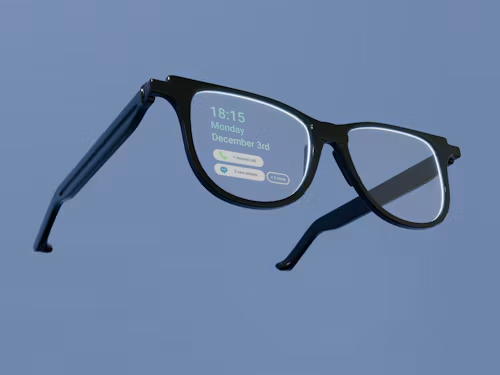
Technology companies are changing how people interact with digital assistants. Instead of opening an application or holding a smartphone, users can increasingly speak to AI through devices they wear throughout the day.
Google’s latest smart glasses are part of this shift. Developed with Samsung and eyewear designers Warby Parker and Gentle Monster, the devices connect users to Gemini, Google’s AI assistant. Their cameras and microphones allow people to ask questions about their surroundings, take pictures and record videos.
For example, someone could ask Gemini to translate a menu, identify information on a sign or suggest a recipe using ingredients on a table.
These features make everyday tasks easier, but they also raise concerns about AI smart glasses privacy. Unlike a smartphone camera, a camera built into ordinary-looking eyewear may be difficult for people nearby to notice.
The Difference Between Personal Convenience and Public Privacy
Smart glasses offer convenience to the person wearing them. They can capture moments quickly, provide information through voice commands and reduce the need to use a phone.
However, the same features can affect people who have not agreed to participate.
A person sitting across from someone wearing smart glasses may not know whether they are being photographed, recorded or analyzed by an AI assistant. Even when a recording indicator is visible, the individual may not understand what the light means.
This creates a difference between having permission to use a device and having permission to capture another person’s image or conversation.
Privacy advocates argue that wearable technology should account for bystanders, not simply depend on the wearer to behave responsibly.
Google Is Exploring Additional Safeguards
Google says its glasses include a visible recording light with protection against attempts to cover or disable it. The company also says faces are automatically redacted when camera visuals are processed for Gemini inquiries.
According to Google, this visual data is encrypted and is not saved in Gemini History or used for advertising and AI model training. The company also prohibits facial recognition on its intelligent eyewear platform.
However, these protections have limits. Face redaction applies to camera use for Gemini questions, not to regular photos and videos saved by the wearer.
Google is researching additional ways to alert people when smart glasses are nearby. It has also considered location-based privacy features and phone notifications, although these ideas remain in development.
The company has not announced a confirmed release date for these additional protections.
Competition Is Making Privacy More Important
Google is entering a market where Meta has already established a strong presence through its Ray-Ban and Oakley smart glasses.
Demand for the category is increasing. Market research firm IDC reported that smart glasses shipments grew by 54% year over year in the second quarter of 2026. Meanwhile, Meta said it sold seven million pairs of its AI glasses during 2025.
Google’s new products are scheduled to launch on December 10, 2026. Warby Parker models start at $395, while Gentle Monster versions begin at $449.
The company is competing through both AI features and its approach to privacy. However, consumer confidence could become just as important as design, price and technical performance.
What the Future Could Mean for Everyday Privacy
The growing use of camera-equipped eyewear may change expectations about recording in public. People are accustomed to seeing smartphones and cameras, but smart glasses make recording less obvious.
Businesses, schools, event organizers and public venues may need clearer rules about where these devices can be used. Technology companies may also face greater pressure to make recording indicators understandable and provide stronger protections for people who do not own the devices.
The future of AI smart glasses privacy will depend on whether manufacturers can balance useful AI features with respect for personal boundaries.
Google’s approach is an important step in that discussion, but the wider challenge remains. Wearable technology must work for its users without making everyone around them feel as though they are constantly being watched.

Online privacy: The risks of mental health apps
The mental health app market has grown rapidly in recent years. In fact, it was valued at $5.2 billion in 2022 and is expected
Read More
X announces the latest updates to its privacy policy
Since being purchased by Elon Musk, X, formerly Twitter, has announced an array of changes to its policies, including a new subscription service that
Read More
FTC starts an investigation into TikTok’s privacy policies
As well as facing the possibility of a ban in the US, the social media platform is now the subject of an investigation by
Read More