Tenerife Port Sees Relief as Hantavirus Cruise Passengers Disembark
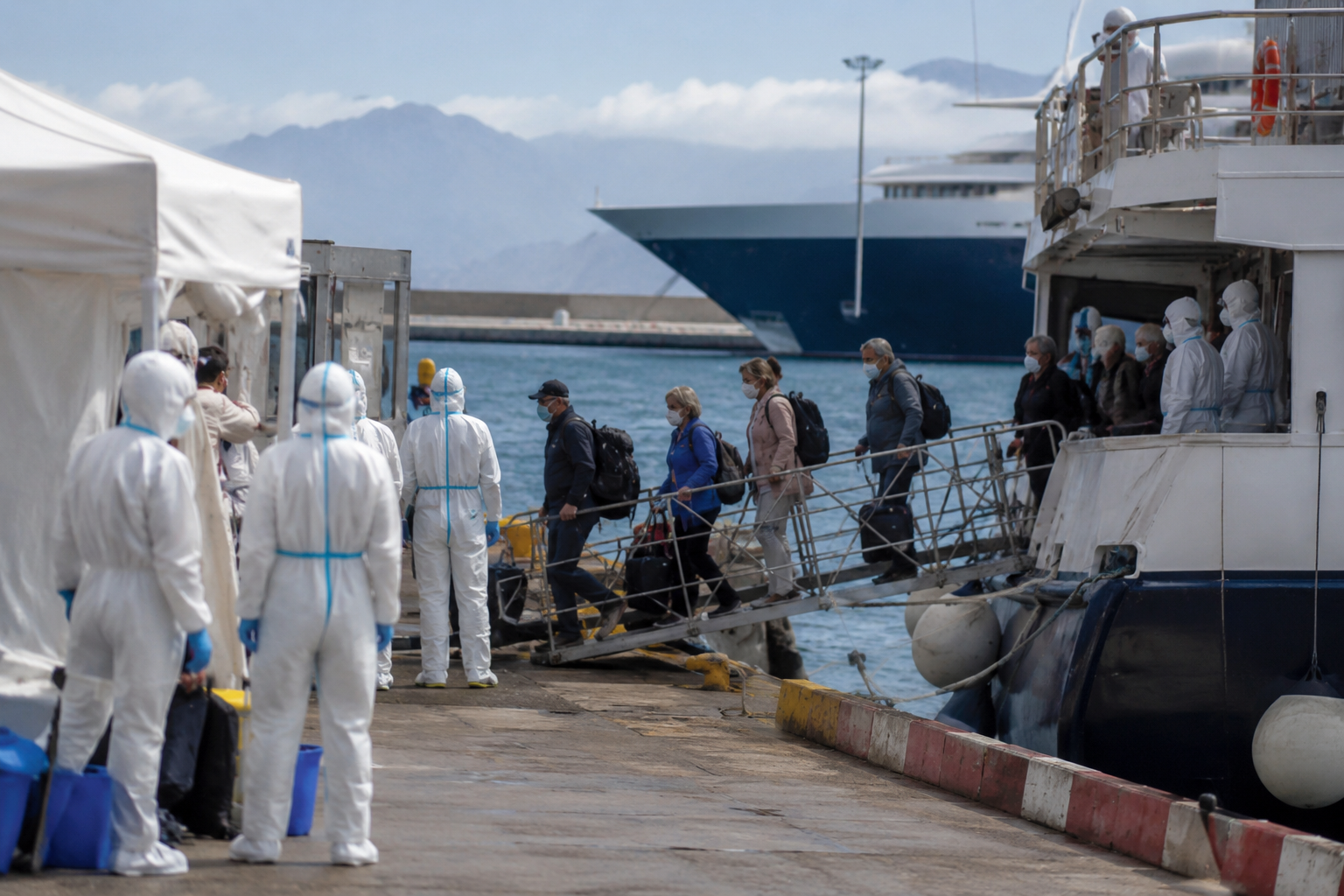
Scenes of both relief and concern unfolded at the Port of Granadilla in Tenerife as passengers from the MV Hondius finally began disembarking after weeks stranded at sea due to a hantavirus outbreak onboard.
Early in the morning, small transport boats repeatedly traveled between the ship and the port, carefully bringing passengers ashore in small groups. Health authorities supervised the operation closely, following strict safety procedures as travelers completed the first stage of their return home.
The cruise ship had spent more than five weeks at sea, with the last several days marked by growing uncertainty after cases linked to the Andes strain of hantavirus were identified among passengers and crew.
Spanish officials had assured local residents that strict precautions would be in place during the disembarkation process. Only medical staff, military personnel, and authorized workers were allowed near the passengers as they arrived at the port.
People wearing protective equipment guided travelers through designated areas set up for medical screening and transportation. The scenes reminded many observers of pandemic-era health protocols, adding to the emotional atmosphere surrounding the operation.
Fear and Attention Surround the Outbreak
The arrival of the ship drew intense international media attention, with journalists from multiple countries gathering near the port throughout the day. The large press presence reflected growing public concern about the outbreak, especially as memories of Covid-19 remain fresh for many people worldwide.
Health experts, however, have repeatedly stressed that this virus behaves very differently from Covid-19. According to specialists monitoring the situation, the Andes strain of hantavirus appears to spread mainly through close and prolonged contact with someone already showing symptoms.
Researchers and public health officials continue studying the outbreak closely, but current evidence suggests it is far less contagious than many respiratory viruses.
Still, passengers onboard the Hondius faced days of anxiety while waiting for clearance to dock. What was originally planned as a once-in-a-lifetime Antarctic expedition became a stressful and uncertain ordeal involving quarantine measures, international coordination, and constant medical monitoring.
The voyage had included destinations known for remote natural beauty and wildlife, but attention quickly shifted from tourism to health concerns after the outbreak emerged onboard.
Relief Mixed With Ongoing Uncertainty
For many passengers, finally reaching land brought a strong sense of relief after weeks isolated at sea. Authorities worked to make the disembarkation process transparent and organized, while ensuring strict health protocols remained in place.
After leaving the ship, passengers were transported directly to flights or quarantine facilities depending on the requirements of their home countries. Although the immediate ordeal of being stranded onboard had ended, many travelers still face weeks of isolation and monitoring before returning fully to normal life.
Health officials say quarantine periods remain necessary due to the virus’s long incubation timeline, which can delay the appearance of symptoms for several weeks.
Despite the continuing restrictions, many passengers appeared relieved simply to step back onto dry land and begin the process of returning home.
The incident has also renewed conversations about how global health authorities respond to infectious disease outbreaks in confined environments such as cruise ships, where close contact can make containment more difficult.
For now, authorities continue monitoring the situation carefully while passengers begin the next stage of recovery after a journey few expected would turn into an international health emergency.

United Airlines Is Done With Loud Passengers — And It Is Now Official Policy
There is a particular kind of in-flight experience that has become depressingly familiar to frequent travelers — the passenger three rows back playing videos
Read More
Experts Say Hantavirus Outbreak Shouldn’t Be Compared to Covid-19
Health officials are continuing to reassure the public that the recent hantavirus outbreak does not pose the same level of danger as the
Read More
Massive Explosion at Iranian Port Leaves 28 Dead & alot Injured
A devastating explosion rocked the Shahid Rajaee port complex in Bandar Abbas, southern Iran, resulting in the deaths of at least 28 people and
Read More