Where Is Iran’s New Supreme Leader? A Nation Waits for Answers
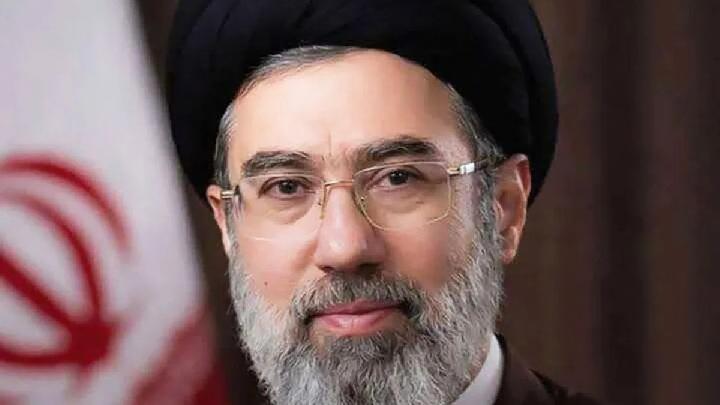
Iran has a new supreme leader. But nobody has seen him. Nobody has heard his voice. And as the days stack up since his appointment, the absence of Mojtaba Khamenei from public life is becoming one of the most talked about aspects of a conflict that has already reshaped the Middle East.
While the Iranian government has worked to project an image of stability and continuity, the man officially holding the reins of the Islamic Republic has yet to step into the light. His silence speaks volumes, and analysts around the world are paying close attention to what it reveals about the true nature of power inside Iran today.
A Leader Born Into the Shadows
Mojtaba Khamenei spent the better part of four decades operating quietly behind the scenes during his father’s long reign. He was known to wield influence within Iran’s political and security circles but made almost no public appearances and gave virtually no interviews. He was, in many ways, a ghost in the machinery of Iranian governance long before he assumed its highest office.
His sudden elevation to supreme leader came under the most dramatic of circumstances. The opening strikes of the American and Israeli military campaign killed his father along with several of Iran’s most senior commanders. By all accounts, Mojtaba himself did not escape unharmed. Reports from individuals with direct knowledge of the situation describe injuries sustained during that first wave of bombardment, including a broken foot, bruising around one eye, and cuts to the face. Iran’s presidential circle confirmed he had been wounded but assured the public he was safe and on the path to recovery.
Washington added its own commentary, with the Defense Secretary claiming the new leader had likely suffered disfiguring wounds, though no evidence was presented. Israeli officials, meanwhile, have made no secret of the fact that they consider Iran’s new leadership structure a legitimate military target.
Faith, Ridicule and AI-Generated Illusions
The response to Mojtaba’s disappearance has split sharply along predictable lines. Loyal supporters of the regime have filled the streets in organized demonstrations of devotion, urged on by clerics and state-backed religious figures who have framed his absence as a form of spiritual humility rather than a sign of weakness. One prominent religious voice went so far as to suggest that a lifetime out of the public eye was proof of the new leader’s exceptional character.
Those who oppose the government have been considerably less charitable. Satirical content mocking the mystery of his location spread rapidly across online platforms, with altered images depicting him as a prop rather than a person. Perhaps most damaging to the regime’s credibility was the revelation that state-aligned media channels had begun sharing artificial intelligence-generated videos of Mojtaba, fabricated footage showing him delivering speeches and appearing at historical events that never actually happened. The term AI supreme leader quickly gained traction as a shorthand for what many saw as a government manufacturing the illusion of leadership.
Who Is Steering the Ship
The deeper question beneath all of this is not about one man’s injuries or whereabouts. It is about whether the Islamic Republic requires a visible, active supreme leader to function during wartime at all.
Experts on Iranian governance suggest the answer is no, at least in the short term. The Islamic Revolutionary Guard Corps, which controls vast military, economic, and security resources within the country, is widely believed to be the dominant force directing the conflict. Mojtaba’s formal title provides the constitutional legitimacy that gives the IRGC and other powerful institutions the authority to act in the name of the state. Whether he is actively involved in those decisions is, for now, almost beside the point.
What awaits him on the other side of this war is a far more demanding challenge. Governing in peacetime, managing Iran’s fractured political elite, and establishing himself as a leader in his own right rather than simply his father’s successor will require a very different kind of presence than what the current moment demands.

Amazon waits for approval to start drone deliveries for the first time
Switching to drone deliveries has been on the cards for Amazon for several years. The shopping giant has been promising to launch the service
Read More
Maria Carey Leaves Jay-Z ‘s Roc Nation; Here’s All The Tea!
Popular music artist Maria Carey has reportedly left Roc Nation. Roc Nation is a talent management company that was founded by the celebrity rapper
Read More
Vaccine mandates for employees rejected by US Supreme Court
The US Supreme Court has stopped the Biden administration from implementing a vaccine mandate that would require all workers at large businesses to be
Read More